
 Member of European University Association
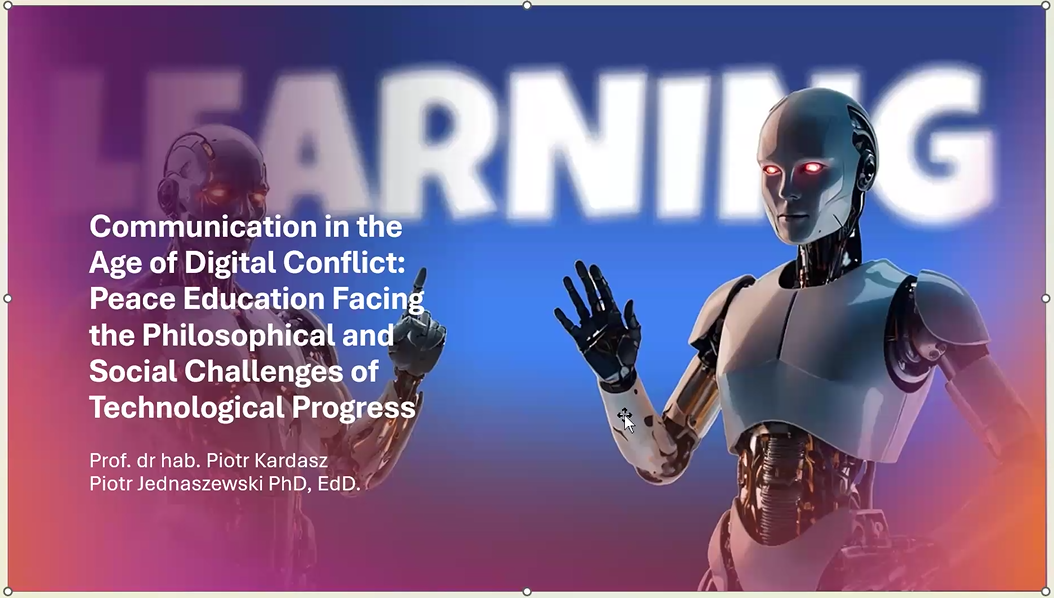
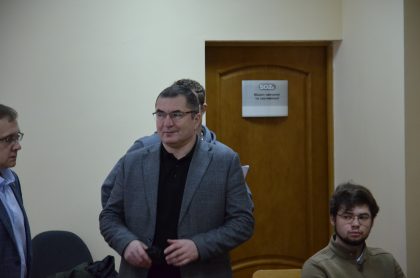
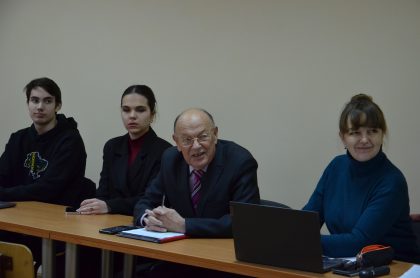
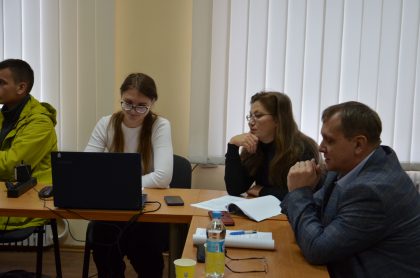
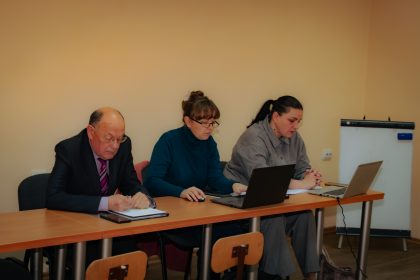
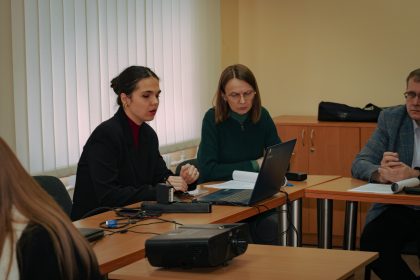
On 26 November 2025, Ternopil Ivan Puluj National Technical University hosted the 4th International Conference of Young Scientists and Higher Education Applicants «Philosophical Dimensions of Technology».
This year, it brought together 123 participants representing 17 institutions and organisations from Ukraine, Poland, the Czech Republic, Ireland, India, and Austria.
The event once again affirmed its status as an important platform for exchanging ideas, where technology, the humanities, and practical experience meet in one meaningful, critical, and relevant space.
Participants of the conference included representatives of numerous Ukrainian and international higher education institutions, such as: Ternopil Ivan Puluj National Technical University, National Defence University of Ukraine, Ternopil Volodymyr Hnatiuk National Pedagogical University, National University of Water and Environmental Engineering (Rivne), Khmelnytskyi National University, Academy of Applied Sciences WSHIU (Poland), Helena Chodkowska University of Technology and Economics (Poland), Edward F. Szczepanik State Vocational University in Suwałki (Poland), Cracow University of Economics (Poland), Higher School of Professional Education in Wrocław (Poland), MOST UA-CZ Association (Czech Republic), St. Mary’s Institute (Ireland), and Shobhit University (India).
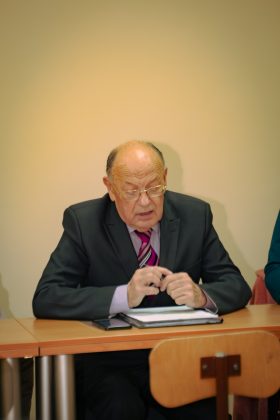
The conference was opened by Pavlo MARUSHCHAK, Vice-Rector for Research at Ternopil Ivan Puluj National Technical University. He emphasised that this is the fourth time the conference has been held, and its thematic focus – from the philosophical understanding of technology to the digitalisation of education and the role of technology during wartime – remains critically important. He thanked participants for their interest and highlighted the significance of international cooperation, especially at a time when Ukraine is fighting for its existence and future.
On behalf of the administration of the Faculty of Economics and Management, the participants were welcomed by Iryna MARTYNYAK, Deputy Dean of FEM. She noted the unique focus of the conference – its social and philosophical vision of technology, centred above all on the Human Being.
International partners also joined the event with welcoming remarks:
• Dr. Yevheniia ZHARYKOVA (Shobhit University, India) stressed that humanity does not merely use technology but forms a new culture of interaction with the technological world.
• Andrzej SENK, Dr. habil., Edward F. Szczepanik State Vocational University (Pol Poland), highlighted the importance of language, culture, and continuity of tradition for the integrity of a state, especially for Ukraine during the war.
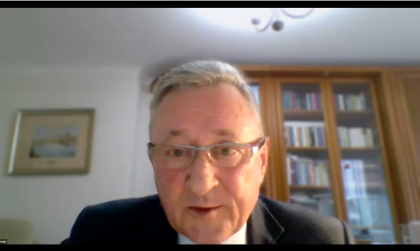
• Julian MAJ, Rector of the Academy of Applied Sciences WSHIU (Poland), expressed condolences and support regarding the tragic losses Ternopil suffered due to russian missile strikes. He emphasised the long-standing partnership and expressed hope for future meetings in peaceful times.
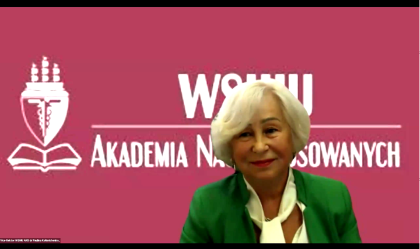
• Paulina KOLISNICHENKO, Vice-Rector of WSHIU, focused on the traditions of Polish and Ukrainian philosophical schools studying technology as a cultural phenomenon. She noted that since 2014, Ukrainian experience has added an existential dimension to this understanding, as technology has become a factor of survival and defence.
The plenary session brought together diverse topics – from philosophy and ethics to social psychology and technological security.
A particularly emotional contribution was made by Oleh HERMAN, Honoured Artist of Ukraine, member of the National Union of Writers of Ukraine, PhD in History, and Professor of the Department of Information Activity and Social Sciences at Ternopil Ivan Puluj National Technical University, with the presentation «Virtualisation of Reality and the Digitisation of Feelings».
Taras KATRUN, director of the diaspora organisation MOST UA-CZ, representative of the Ukrainian national minority within the Committee on National Minorities of the Government of the Czech Republic, and member of the Association of Historians of the Czech Republic, presented «Digital Identity of Ukrainians in the Diaspora During the War».
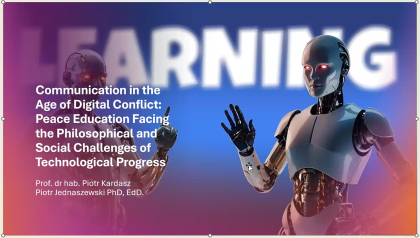
The plenary continued with Piotr JEDNASZEWSKI, PhD, EdD (St. Mary’s Institute, Dublin, Ireland), who presented «Communication in the Era of Digital Conflicts and the Challenges of Peace Education».
A significant contribution on wartime technologies was delivered by Inna SAVINA, Lieutenant Colonel, PhD in Pedagogy (National Defence University of Ukraine), titled «The Development of First-Person View Unmanned Aerial Vehicles in the Context of the Russian-Ukrainian War».
Moral and diplomatic boundaries of military technology were examined in a report by Piotr SKŪDZIK, Professor, Dr. habil. (Higher School of Professional Education in Wrocław, Poland).
The socio-psychological section featured a joint study by Damian BADZMIROWSKI, M.A. in Psychology, M.Sc. in Psychotraumatology, Centre for Market and Social Research (Poland) & Piotr KARDASH, Professor, Dr. habil., Higher School of Professional Education in Wrocław (Poland): «High Self-Esteem as a Driving Force of Employee Behaviour During the Notice Period Prior to Dismissal».
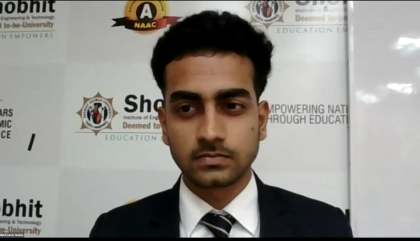
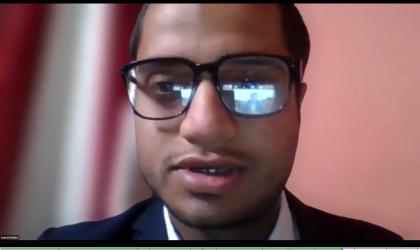
Technological challenges of the global world were discussed by representatives of Shobhit University (India): Nikhil Kumar SHUKLA, «Technological Determinism and the Loss of Human Autonomy»; Adarsh MISHRA, «A Real-Time Multimodal AI System for Detecting Disinformation in Emergency Situations and Assessing Threat Prioritisation» (supervisor: Dr. Rajesh PANDEY); Bello-Bello MUSA, «The Role of Cyberforensics in Enhancing the Effectiveness of Police Investigations» (supervisor: Dr. Fakrun JAMAL).
An important part of the conference was the participation of higher education students from our university: Kateryna MARUSHCHAK, 2nd-year student of FIS: «Philosophy of AI: Computationalism and Connectionism»; Viktoriia PAVLYNA, 1st-year student of FEM: «Technogenic Civilization in the Light of Oswald Spengler’s Ideas».
We sincerely thank all participants and partners for their support, engagement, and meaningful research contributions, and we look forward to continued cooperation.
On behalf of the Organising Committee, we express our gratitude to Danyil Istomin and Yevhenii Dovhyi for organising the conference photo coverage.








More from the site:
 2 Feb 2021 TNTU improves its position in Webometric ranking
 21 Dec 2024 TNTU will cooperate with educational association “Center of Ukrainian Researchers in Austria”
 5 Oct 2019 The University took the honorary 2nd place in the nomination “Best Higher Educational Establishment, which uses innovative methods in education” of All-Ukrainian Award “Innovation in Education”
 31 Dec 2022 Happy New Year!
 23 Feb 2023 The University of Toronto is offering the summer research program in computer science for students from Ukraine
 27 Nov 2022 Theoretical Conference of young scientists and students “PHILOSOPHY TECHNOLOGY ASPECTS”
 27 Aug 2024 A delegation from the Czech Republic visited TNTU
 21 Jul 2023 Rector Mykola Mytnyk Holds Meeting with a Representative of the Diplomatic Mission of the Republic of Lithuania