 Member of European University Association
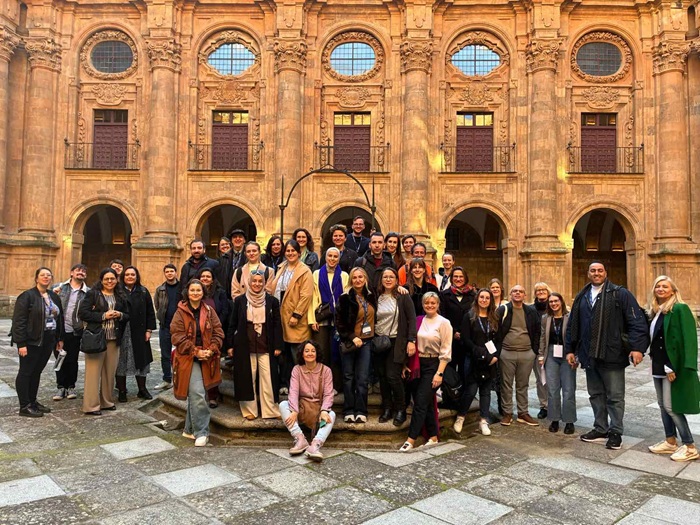
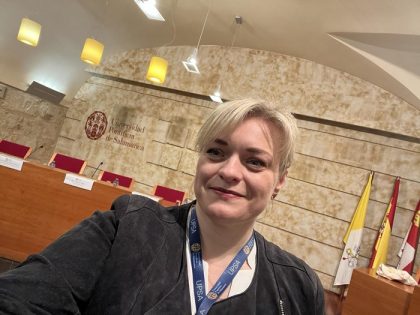
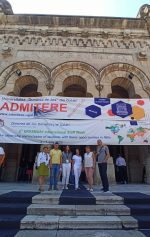
March 23-27, Nataliia MARYNENKO, Professor of the Department of Economics and Finance, participated in the International Staff and Teaching Week UPSA 2026, organized by the Pontifical University of Salamanca (Universidad Pontificia de Salamanca – UPSA, Spain) within the framework of the Erasmus+ program.
The central theme of the event focused on the blended intensive mobility program — “Artificial Intelligence in Higher Education: Benefits and Challenges for Universities.” The event brought together representatives from partner universities to discuss the transformational impact of technology on the educational process.
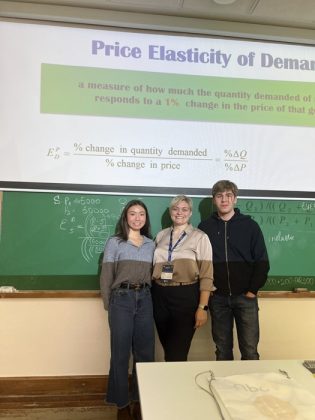
During her visit, Nataliia MARYNENKO delivered a series of lectures for UPSA students. The presentation and subsequent discussion of topical economic issues allowed Spanish students to gain insights into Ukrainian experience and contemporary approaches to pricing strategy.
Participation in dedicated workshops provided an opportunity to thoroughly analyze the application of AI tools in teaching business disciplines and software engineering, as well as to address the ethical aspects of AI governance in the academic environment.
The best-practice exchange sessions allowed for the presentation and discussion of innovative approaches to utilizing AI to enhance the inclusivity of higher education and improve student employability indicators.
The program also included an introduction to the historical heritage of the Pontifical University of Salamanca and the strengthening of partner relations within international cooperation. Special attention was paid to discussing the implementation stages of the international project ERASMUS EDU-2023-CBHE “UA-Talent-UP”, in which TNTU and UPSA have been successfully collaborating for three years, reinforcing the potential of university education.
A visit to the UPSA MakerSpace provided an overview of the laboratory’s technical capabilities and educational resources. This experience is highly valuable for developing cooperation between university creative spaces, particularly considering the active operations of the FabLab at TNTU.
Participation in such initiatives reaffirms TNTU’s active role in European educational initiatives and facilitates the integration of innovative digital tools into domestic higher education.
We express our sincere gratitude to the Pontifical University of Salamanca for the outstanding organization of the event and its insightful program!
More from the site:
 22 Feb 2026 TNTU improves position in QS World University Rankings: Europe – Joins Top 100 in Eastern Europe
 31 Dec 2022 Happy New Year!
 20 Apr 2023 A series of trainings were held at Ternopil Ivan Puluj National Technical University as a part of the international project “Smart Manufacturing, Innovation, Learning-labs, and Entrepreneurship” (SMILE)
 2 Dec 2025 TNTU Team Presented the “IoT Cheese Chamber” Project at the International Hackathon Hack4Edu 2025
 1 Dec 2025 4th International Conference of Young Scientists and Higher Education Applicants «Philosophical Dimensions of Technology»
 25 Mar 2025 Ternopil Ivan Puluj National Technical University strengthens its position in the international academic space.
 5 Jul 2021 Ternopil Ivan Puluj National Technical University is among the top 15th universities in Ukraine
 9 Jul 2023 Representatives of TNTU participated in an international week dedicated to diversity and inclusion